
1. AI & Automation: The Smart Backbone of DevOps
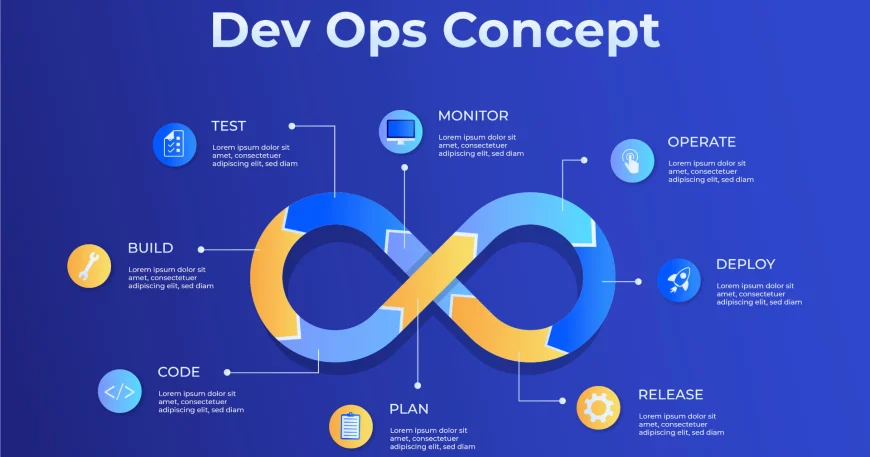
AI has moved from aspirational to operational within DevOps:
- Generative AI is enhancing productivity by automating tedious pipeline tasks like testing, QA, and issue triage—but the key is implementing it incrementally and securely to avoid disruption and developer backlash (TechRadar).
- Developers are embracing vibe coding, where natural-language prompts generate code—but this also brings new security challenges. Zero Trust, threat hunting, and platform-based defenses are becoming vital (TechRadar).
2. DevSecOps & Security-First Pipelines
Security is now a central pillar, not an afterthought:
- Embedding AppSec across tooling and developer workflows is more critical than ever, yet many organizations still lack full security coverage—only 39% report actually operating secured applications (TechRadar).
- DevSecOps continues to rise, with tools like SAST, DAST, and SCA becoming standard fare (Graphite.dev, Chef Software).
3. GitOps, Platform Engineering & Internal Developer Platforms (IDPs)
The infrastructure and workflow revolution continues:
- GitOps, with its declarative, version-controlled approach to infrastructure deployment, is rapidly becoming a go-to model for reliable, auditable operations (DuploCloud, DevOps.com).
- Platform Engineering, through IDPs, is streamlining developer workflows—providing self-service, standardized “golden paths” for common tasks while maintaining governance and speed (Medium, Wikipedia).
4. FinOps & Cost Governance
As cloud dependency grows, so does the pressure to optimize costs:
- FinOps practices are empowering teams to balance performance with economics by closely tracking and managing cloud spending (Medium).
5. DevOps Meets MLOps: Unified Pipelines
Bridging the gap between software and AI model deployment:
- Integrating DevOps and MLOps into a unified supply chain helps avoid siloed workflows, reduces redundancy, and enhances compliance and traceability (TechRadar).
- Empirical studies confirm that adopting ML DevOps practices leads to faster deployments, fewer errors, smoother collaboration, and lower operational costs (arXiv).
6. AIOps: Smarter, Proactive Operations
AI is redefining operational excellence:
- AIOps platforms harness AI and big data for automated monitoring, anomaly detection, issue resolution, and predictive maintenance—boosting system resilience and reducing manual toil (Graphite.dev, Wikipedia).
7. Developer Experience: Tools and Skills for 2025
The landscape of DevOps tooling and skills is evolving:
- Legacy tools like Jenkins and Ansible are being replaced by modern CI/CD platforms like GitHub Actions and GitLab CI. Key skills now include cloud infrastructure, Linux, Docker, Kubernetes, Terraform, plus an understanding of DevSecOps (Reddit).
- TestOps emerges as a discipline blending testing and operational mindset to ensure testing is continuous, efficient, and integrated with feedback loops (Wikipedia).
8. Market Growth & Industry Outlook
DevOps is booming:
- The global DevOps market is projected to grow from $10.4B in 2023 to $25.5B by 2028, with a 19.7% CAGR (Spacelift).
- Regionally, North America dominates, but adoption is growing worldwide (Spacelift).
9. Careers That Are Rising
In a world of automation, DevOps roles sustain resilience:
- Despite automation-driven layoffs in other areas, DevOps Engineers remain in high demand for their unique combination of systems, security, and automation skills (The Times of India).
Bonus: What Developers Are Saying
From Reddit:
“Big trends: GitOps, FinOps, self-service platforms, and tighter observability. AI is helping, but mostly as a copilot, not yet a game-changer in pipelines.”
(Reddit)
“Besides AI, check out platform engineering, GitOps, DevSecOps, and AI-driven automation (MLOps, AIOps).”
(Reddit)
| Trend | What’s Changing |
|---|---|
| AI + Automation | Intelligent pipeline tasks, code generation, QA automation |
| DevSecOps | Security baked into every stage of development |
| GitOps & Platforms | Version-controlled infra, self-service developer tools |
| FinOps | Strong focus on cloud cost efficiency |
| Unified Dev/MLOps | Blended workflows for code and ML model delivery |
| AIOps | AI-powered operations for proactive problem-solving |
| Modern Tooling | Shift to Git-based CI/CD (GitHub Actions), TestOps integration |
| Market Growth | Strong expansion, especially in North America |
| Career Resilience | DevOps roles remain essential amid automation trends |
Final Thoughts
DevOps in 2025 is marked by a powerful fusion of AI, security, platform engineering, and cost governance. The movement toward integrated, self-service infrastructures—and the merging of DevOps and ML workflows—suggests a future where delivery is smarter, leaner, and more resilient.

